The Lost Frontier
A 1792 frontier FPS that runs in-browser
A first-person shooter set on the 1792 American frontier, running entirely in the browser at thelostfort.com. Three.js rendering, Rapier3D WebAssembly physics, and AI-generated enemy models — plus a companion AR tour that places a 1770s fort reconstruction at real Western Pennsylvania historical sites.
The Challenge
Console-style FPS gameplay in a browser pushes against WebGL performance limits, physics cost, and download sizes — and for a solo developer, 3D art is normally the biggest expense of all.
Browser games have historically meant 2D or toy-grade 3D experiences
Realistic physics — collision, climbing, character movement — is computationally expensive in JavaScript
Character and environment models normally require artists or costly asset packs
Large 3D files (the master fort model is 40MB) fight against web load times
Local frontier history is invisible to people driving past the actual sites
The Solution
One codebase ships both a playable FPS and a location-based AR history tour, with AI tooling closing the asset gap a solo developer would otherwise face.
Three.js rendering: WebGL pipeline with bloom and vignette post-processing, day/night cycle, dynamic fog, and 75,000 GPU-instanced grass blades
Rapier3D WASM physics: kinematic character controller with auto-step, snap-to-ground, wall sliding, and ladder climbing
AI asset pipeline: enemy models generated with AI 3D tools, then compressed from 25MB raw to 256KB shipped via glTF-Transform and Draco
Combat loop: period weapons (flintlock pistol, tomahawk), enemies with health and attack behavior, player damage, death screen with kill count, respawn
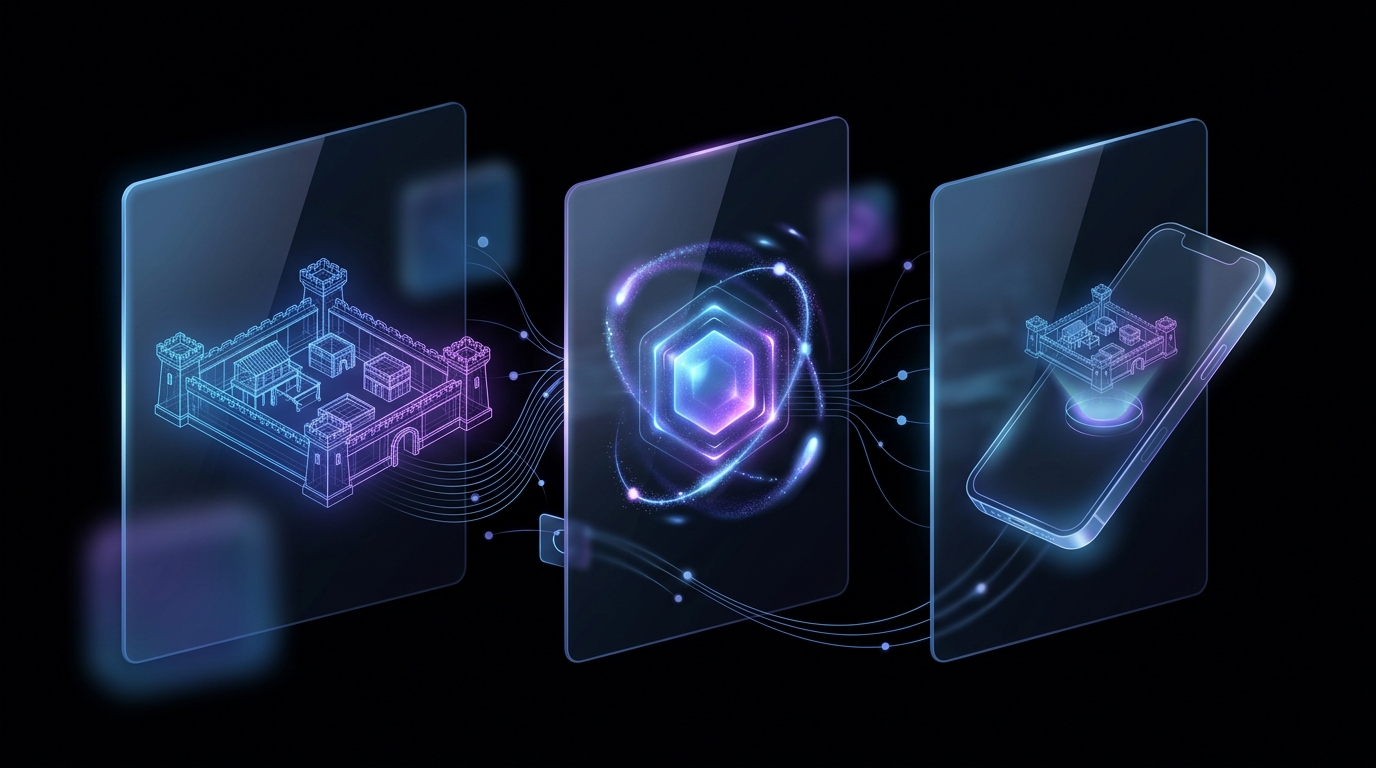
AR history tour: QR plaques and GPS geofences trigger a 1770s fort reconstruction placed in the real world via Scene Viewer and AR Quick Look
Offline-ready PWA: a service worker keeps the AR tour working at remote historical sites with weak coverage
The Results
A live, playable 3D FPS and a field-tested AR experience, built and shipped by one developer on a single codebase.
Live and Playable
Open thelostfort.com and play — no download, no account, no install
Real Physics in the Browser
Rapier3D compiled to WebAssembly handles collision, climbing, and movement that plain JavaScript could not sustain
AI-Built Art at 1% of the Size
AI-generated enemy models cost under a dollar each to create and ship at 256KB after a 25MB raw export — measured from the actual files
AR Field-Tested On Site
The Cherry's Fort AR tour was confirmed working on Android at the real Western Pennsylvania location in April 2026
Gallery

Technical Architecture
Fully client-side: a Vite multi-page build serves the game, the AR tour, and a marker-based character viewer from one repo. Rapier3D loads as WebAssembly, a Blender-to-GLB pipeline feeds glTF-Transform and Draco compression at build time, and Netlify deploys to the edge — with isolation headers scoped per-page so the Android AR hand-off keeps working.
Technology Stack