Operational Intelligence Platform
Always-on market intelligence from coordinated AI agents
A multi-agent intelligence system for the automotive and mobility sector. A 13-agent research pipeline and a seven-agent always-on briefing layer discover, analyze, and synthesize market, regulatory, and standards intelligence -- 160+ source-attributed findings per cycle. Deployed on Railway with a PostgreSQL + PGVector knowledge base that compounds over time.
The Challenge
Strategic teams in the mobility sector drown in fragmented information. The sources that matter -- industry press, academic research, regulators, standards bodies, competitors -- move continuously, and manual research cannot keep up.
A human analyst covers roughly 10-20 sources; the relevant landscape spans hundreds
Compiled reports are outdated by the time they are finished
Regulatory and standards activity across NHTSA, EPA, EU bodies, SAE, ISO, and IEEE is easy to miss
Single-prompt AI tools start cold on every question and cannot show their sources
Insight quality varies analyst to analyst, with no consistent confidence scoring
The Solution
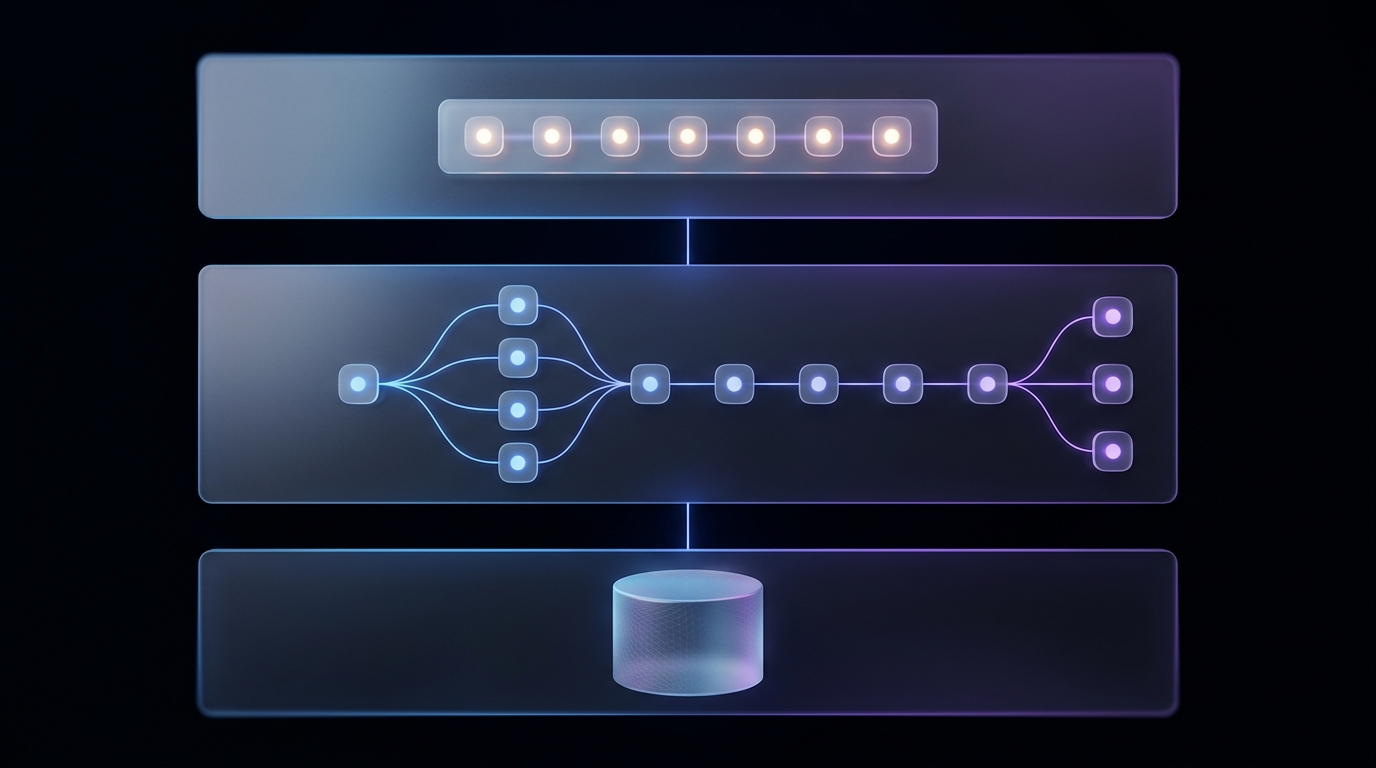
Two coordinated agent systems share one knowledge base. A seven-agent layer runs continuously so the system is never cold, and a 13-agent pipeline executes deep research on demand -- discovery in parallel, analysis and synthesis in sequence.
Always-on briefing layer: seven agents monitor 50+ feeds, regulations, standards, trends, and risks so answers are gathered before anyone asks
3-tier research pipeline: 4 parallel discovery agents, 6 analysis agents, and 3 synthesis agents deliver executive-ready briefs from 160+ sources
Warm-start RAG: every finding auto-imports into PostgreSQL + PGVector, so repeat questions answer from accumulated knowledge
Explainable knowledge graph: semantic similarity paired with extracted shared themes shows why entities connect, not just how strongly
Live agent visibility: WebSocket streaming shows each agent's progress on the dashboard during a research cycle
Tool isolation: each agent is a declarative Markdown definition with its own restricted tool set, enforced by the Claude Agent SDK
The Results
The platform runs in production on Railway, replacing days of manual source-gathering with tiered agent cycles measured in minutes -- every insight attributed to its source.
Deployed to Production
Railway backend, Netlify frontend, and PostgreSQL + PGVector database live since December 2025; the first production run generated 31 briefing items in about 4 minutes
160+ Sources per Cycle
Each discovery pass verifies 160-200 sources -- roughly ten times what a single analyst covers -- with attribution on every finding
Minutes, Not Days
A full discovery, analysis, and synthesis cycle completes in 5-10 minutes by running discovery agents in parallel
Compounding Knowledge Base
The warm-start design means every cycle enriches the vector store, so the system gets faster and more complete the longer it runs
Gallery

Technical Architecture
A Claude Sonnet 4.5 orchestrator spawns Markdown-defined agents through the Claude Agent SDK inside a Railway Docker container: discovery agents run in parallel, analysis and synthesis run in sequence, and a WebSocket layer streams agent activity to the React dashboard. Outputs auto-import from JSON into PostgreSQL with PGVector, where a Graphology-based knowledge graph links entities by semantic similarity and shared themes.
Technology Stack