AI Business Empire
An autonomous coding harness that ships software
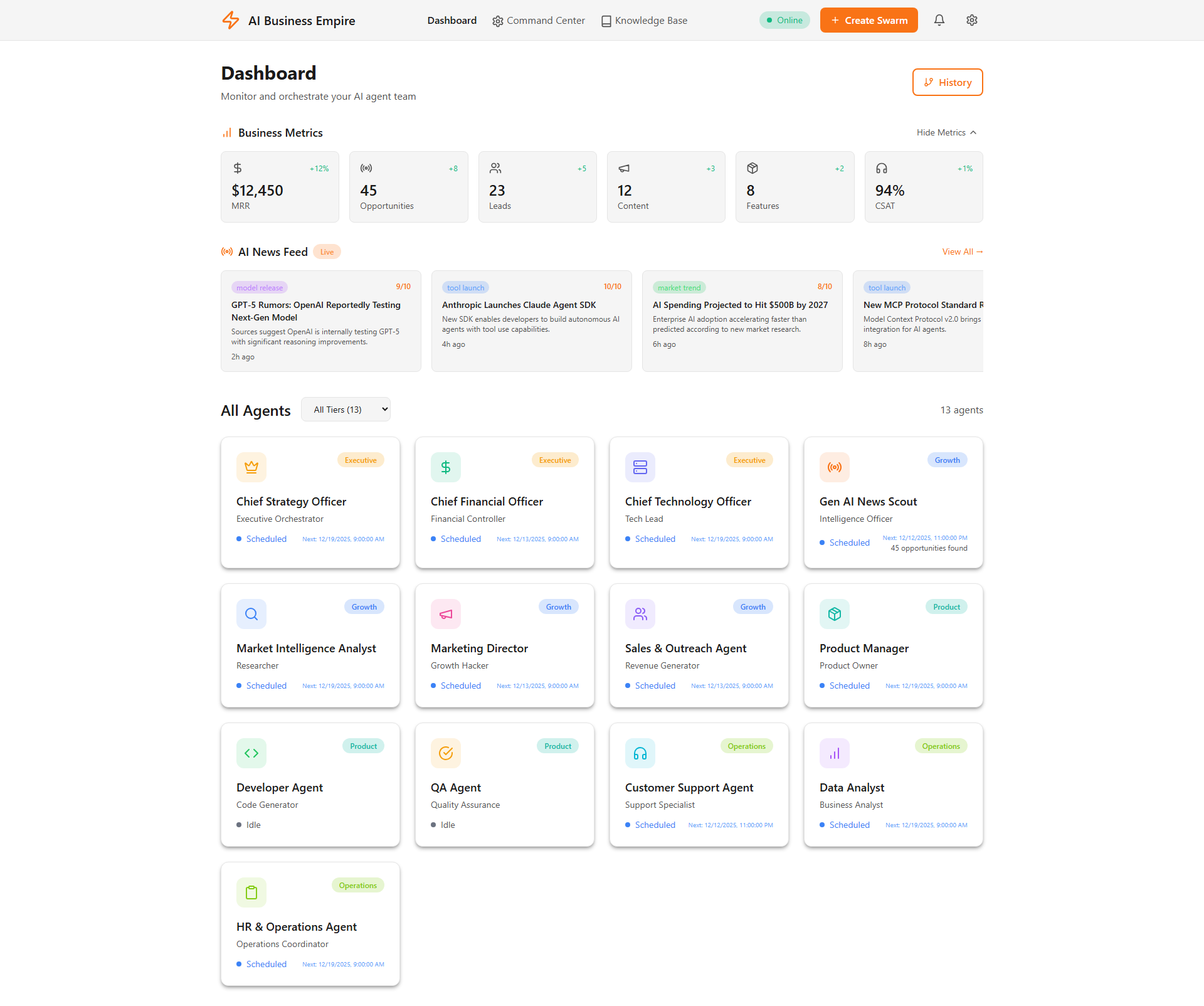
An autonomous coding harness ran 108+ fresh-context sessions to build AI Business Empire: a command center for 12 specialized AI business agents. Every line of the Next.js and Express codebase was written by AI, then verified in a real browser against a ledger of 236 Puppeteer test cases.
The Challenge
Real applications take longer to build than a single AI context window allows. Could a coding agent that forgets everything between sessions still deliver a complete full-stack product, with proof instead of promises?
An AI agent's memory ends with its context window; a multi-week build does not
Without external ground truth, AI-written code drifts and features regress silently
Frontend, API, database schema, and tests all have to stay coordinated across sessions
Reviewing every AI change by hand defeats the purpose; verification must be automated and honest
Resuming long runs is fragile: the project's own ops guide documents a resume mistake that cost ~6 hours of compute
The Solution
A harness that turns a memoryless coding agent into a persistent engineering team: a session loop, a progress file for memory, and a 236-case test ledger as ground truth. The artifact it produced is a working command center for 12 AI business agents.
Session loop: a Python driver relaunches the coding agent against the same project, session after session, 108+ times
Persistent memory: each session ends by writing progress notes that the next session reads before touching code
Test ledger: 236 Puppeteer test cases define done; a feature only counts when its test passes in a real browser
Honest self-assessment: late sessions reported zero new passes rather than inflate results, because the remaining tests need live infrastructure
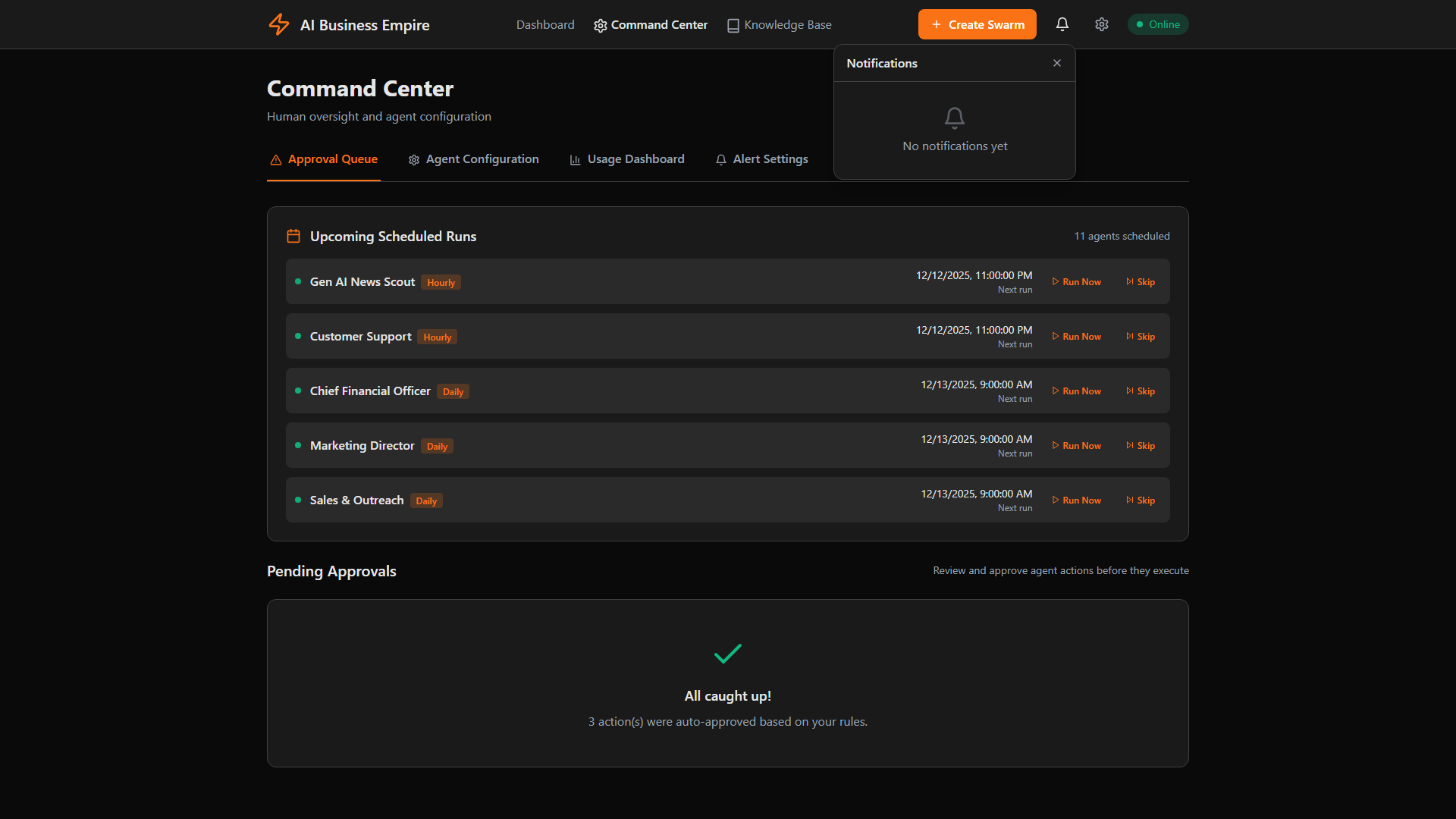
The product: a 12-agent command center with live SSE run streaming, swarm mode, approval queue, usage dashboard, and a searchable knowledge base
Tiered model routing: Haiku for data gathering, Sonnet for analysis and orchestration, Opus for synthesis
The Results
The harness produced a feature-complete full-stack application with a 96% test pass rate and a documented, resumable engineering history, and the method now informs production agent systems.
227 of 236 Tests Passing
96% pass rate verified by browser automation; the remaining 9 tests require live database, API, and cron infrastructure and are documented, not hidden
Complete Full-Stack Application
Next.js 14 frontend, Express API with SSE streaming, and a Prisma/PostgreSQL schema with 11 tables, 30+ indexes, and 14 custom enums
13,800+ Lines, Zero Hand-Written
All application code authored by the agent across sessions, committed to git with session-by-session history and progress reports
A Repeatable Method
Progress-file memory plus a test ledger proved that long-horizon autonomous builds work; the same pattern carries into Global Quest's later agent systems
Gallery
Technical Architecture
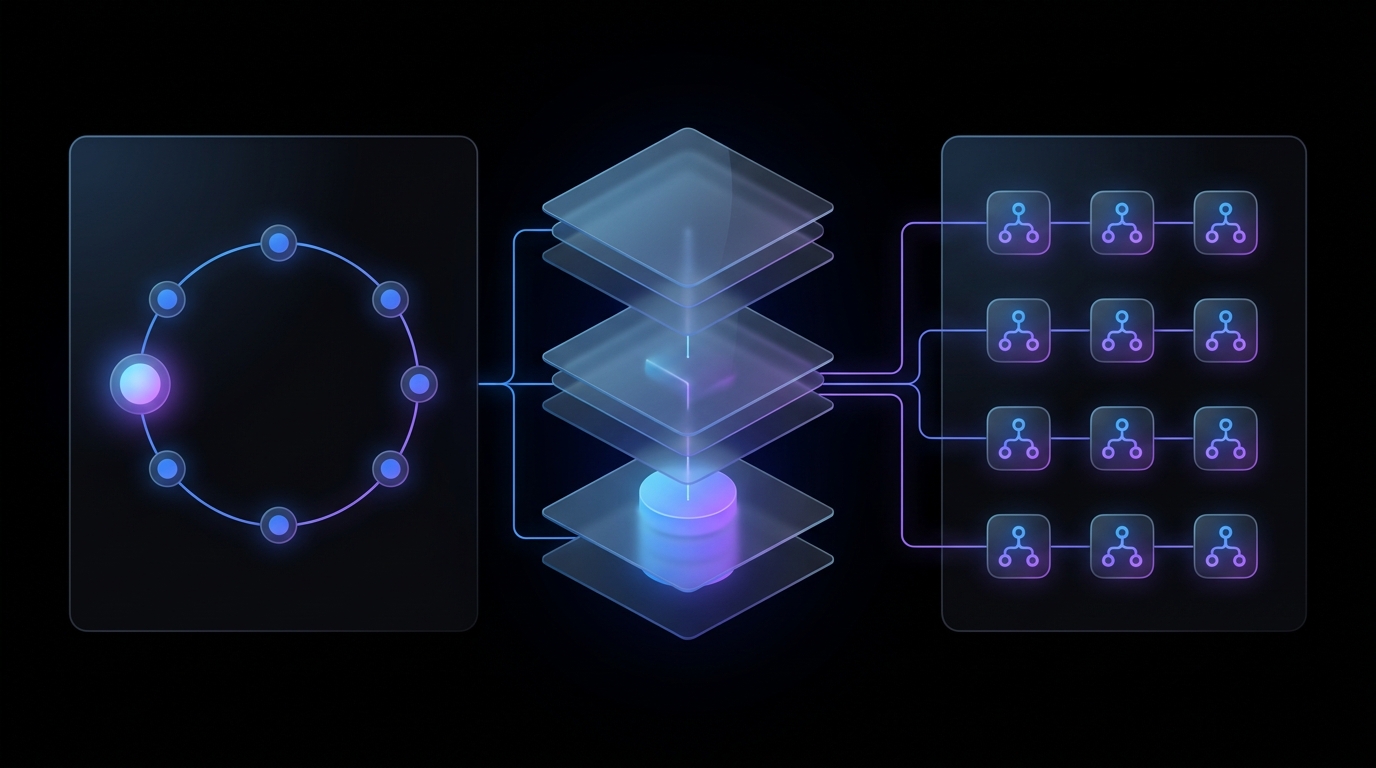
Two systems in one. The harness: a Python driver relaunches a fresh-context coding agent that reads the progress file, picks a failing test from the 236-case ledger, implements it, verifies it with Puppeteer, and writes notes for the next session. The application: Next.js 14 talking to an Express API that runs agents through the Claude Agent SDK, streams progress over SSE, and persists to PostgreSQL via Prisma, with node-cron handling scheduled runs.
Technology Stack